
Pressure washer safety — what can actually hurt you
Affiliate Disclosure: As an Amazon Associate we earn from qualifying purchases. This doesn't affect our editorial independence — every recommendation is based on genuine research and analysis.
Most people think of pressure washers as garden kit. Rinse the patio. Clean the car. Harmless stuff.
Then you look at the numbers. A domestic Karcher K4 puts out 130 bar — that's 1,885 PSI at the nozzle. Hospital A&E departments in the UK deal with hundreds of pressure washer injuries a year, according to RoSPA figures, and the worst ones are cases people didn't think could happen.
Heads up — some links below are Amazon affiliate links. If you buy something through them, we earn a small commission at no cost to you. It keeps the site free and commission-free for the tradespeople using it.
Jet injuries — the one most people don't see coming
At 130 bar, a pressure washer jet will punch straight through a thin glove and into the soft tissue of your hand. You feel a sting and a bit of bruising. What's actually happened is the water (sometimes carrying debris or cleaning chemicals) has been injected several centimetres under the skin.
The wound looks tiny on the outside. Inside, you've got contaminated water sitting in tissue that wasn't designed to have water in it. Infection rates for untreated pressure washer injection injuries are brutal — and in the worst cases, fingers have been amputated from infections that started with what looked like a graze.
The rule: any pressure washer jet injury that breaks the skin, even slightly, means a hospital visit. Show them the nozzle type and operating pressure. This is time-critical — they may need to open the wound surgically to clean it out.
The moment it usually happens
Clearing a blocked nozzle with your finger. Testing if the trigger is locked off. Accidentally triggering the wand while cleaning the tip. All of those are moments people have lost time in A&E for.
Hose whip and the nozzle coming off
A poorly connected nozzle at 130 bar will fire itself off the end of the lance at roughly the speed of a pellet from an air rifle. The hose then whips around, driven by the pressure, until you let go of the trigger.
Two lessons from this:
- Check the quick-connect locks into place every single time you swap nozzles. Listen for the click. Tug the nozzle to confirm it's seated.
- Always have the discharge aimed away from people when triggering, even briefly. That initial pressure surge is where most nozzle ejections happen.
The Karcher K4 Power Control at £199.99 has positive-locking quick-connect fittings and a pressure-variable wand, so you can dial it down to 20 bar for surfaces where full 130 bar would damage the finish. Variable pressure is an underrated safety feature — it lets you match the tool to the job instead of assuming max pressure is the answer.
Electric shock — more common than you'd think
Electric pressure washers and water. Obviously combining those has hazards. The ones that catch people out:
Running the unit from a non-RCD-protected socket. Every UK pressure washer should run through a 30mA RCD — either the one built into the unit, the one on your consumer unit, or an in-line RCD plug. Don't assume the garden outdoor socket is protected; check.
Using a domestic extension reel fully wound up. A coiled 13A extension reel running a 1.8kW pressure washer can hit 60°C inside the drum, melt the insulation, and take out the reel. Unroll the full cable before starting.
Damaged mains cables. The cable runs across wet concrete in puddles of soapy water. Inspect it before every use — cuts, nicks, exposed conductor all mean the unit goes back in the van until it's repaired.
Honest opinion
Budget £80 pressure washers from the supermarket tend to have the shortest mains leads and the cheapest RCDs. Not worth the risk for trade use. The Karcher K2 Universal at £119.99 is about as budget as we'd go — and the build quality on the cord and fittings is noticeably better.
Slip hazards — boring but the most common injury
Cleaning chemicals plus water plus smooth surfaces. You knew this was coming. The ankle injury and head injury statistics from pressure washer use are mostly slip-and-fall, not jet injuries.
Detergent left on surfaces stays slippery for hours. If you're washing a patio and stepping back onto the freshly washed section to reach the next bit, you're working on greased glass.
Proper safety boots with deep cleated soles help. A lot. The DeWalt Newark safety boots at £64.99 have a slip-resistant outsole rated for wet conditions. Don't wear smooth-soled trainers to pressure-wash. It sounds obvious. People still do it.
We cover pressure-washer-appropriate footwear in more depth on our safety boots page.
Eye and ear protection
That spray bounces back. And it's carrying whatever was on the surface you were cleaning — including chemical runoff, splinters of paint, fragments of moss and brick. Full wraparound safety glasses aren't optional.
Ear protection gets forgotten. Most domestic pressure washers sit at 85-95 dB at the operator position. Over a full morning's use, that's enough to cause hearing damage under HSE exposure limits. Petrol-driven units are louder still — closer to 100 dB.
Petrol pressure washers and CO risk
Petrol units in enclosed spaces are a genuine carbon monoxide hazard. We've seen cases where a contractor pulled a petrol pressure washer into a shop basement for warehouse cleaning and three people ended up in hospital.
Petrol pressure washers are outdoor-use only. No exceptions. No "just for a minute". Outdoors or don't use it.
Kickback and operator stance
A 130 bar jet generates measurable recoil. It won't knock you off a ladder unless you're badly positioned, but it will make precise work tiring over a long session. Feet shoulder-width, knees soft, both hands on the wand.
Never pressure-wash from a ladder. That sounds like overkill advice. It's not — it's RoSPA's number one pressure washer safety recommendation. The kickback plus the slip risk plus the awkward one-handed position makes it genuinely dangerous. Use an extension lance instead.
What we'd put in a trade pressure washing kit
- Mid-range electric unit with variable pressure — Karcher K4 or similar
- In-line RCD plug if you're unsure about the site's wiring
- Wraparound safety glasses and 27dB ear defenders
- Slip-resistant safety boots rated for wet conditions
- Chemical-resistant gloves for detergent handling
- Extension lance for working above head height
And one habit worth copying
Trigger-lock off and disconnect the hose before clearing any blockage. Every time. Every single time. That habit alone prevents 90% of the jet injuries we read about.
Final thought
Pressure washers aren't scary. They're just more serious tools than their consumer packaging suggests. Treat them with the same respect you'd give an angle grinder and you'll never have a problem.
Top picks: Pressure Washers for Builders
Ranked from our research and cross-referenced buyer reviews. Prices change, so check the current price on Amazon.

Pressure Washers
Karcher K4 Power Control Pressure Washer
Around £199.99
Check price on Amazon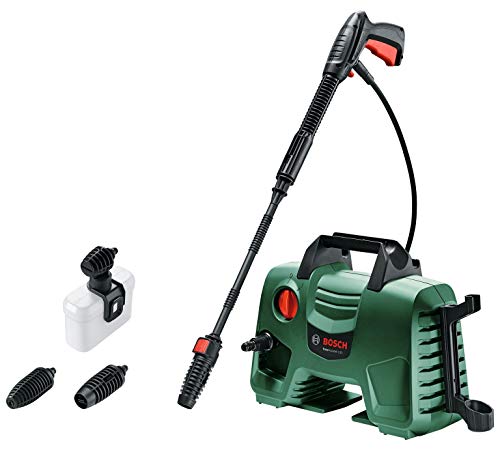
Pressure Washers
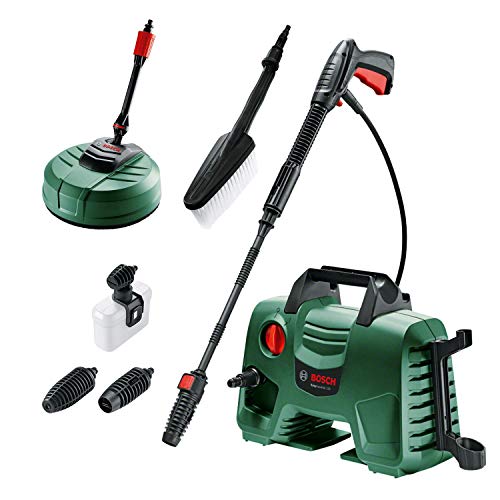
Bosch UniversalAquatak 135 Pressure Washer
Around £149.99
Check price on AmazonRelated Reviews

Browse All Pressure Washers
10 products reviewed with buying guides
Affiliate Disclosure: As an Amazon Associate we earn from qualifying purchases. This doesn't affect our editorial independence — every recommendation is based on genuine research and analysis.