
Best Dashcams (2026)
Protect your livelihood with a dashcam that captures every detail. We have compared the top models for vans, HGVs, and trade vehicles across the UK.
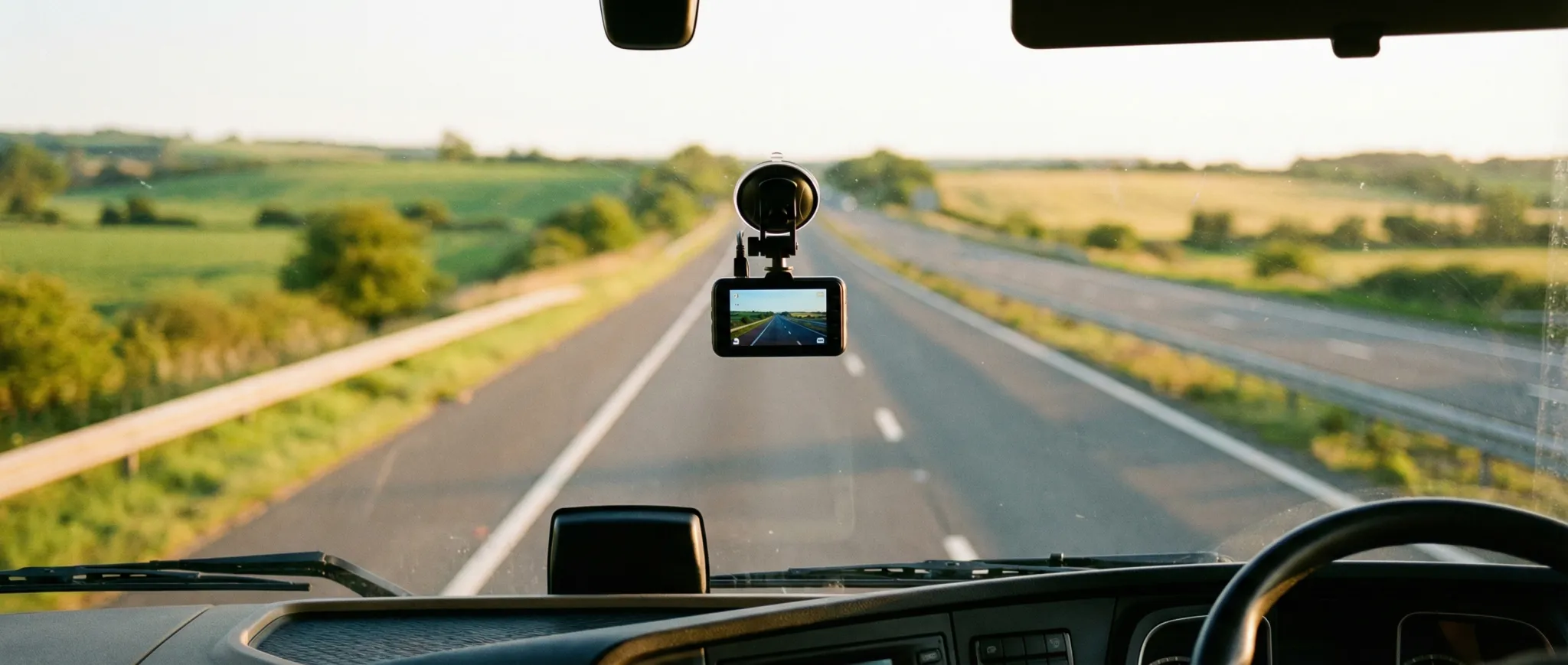
Dashcams built to withstand the demands of commercial driving. Whether you run a van, HGV, or fleet of vehicles, a reliable dashboard camera protects you against false insurance claims, records incidents, and can lower your premiums. Look for 4K resolution, parking mode, GPS logging, and front-plus-rear coverage when choosing a cam for trade use.
Protect your livelihood with a dashcam that captures every detail. We have compared the top models for vans, HGVs, and trade vehicles across the UK.
Quick Answer
For most van-based trades the Nextbase 422GW at around £150 is the one: 2K footage that reads number plates 1080p misses, a 10Hz GPS that stamps your speed on every frame, and a Nextbase rear module can be added later. If you want front and rear in the box, the Viofo A129 Pro Duo at around £170 gives you 4K front, 1080p rear and buffered parking mode. Taxi drivers who need the cabin covered should look at the Garmin Dash Cam Tandem at around £300.
Best for HGV Drivers
12 reviewedHeavy goods vehicle drivers operating Class 1 and Class 2 vehicles across long-haul and regional routes, needing gear that handles cab vibration, overnight stops, and all-weather motorway conditions
Read GuideBest for Electricians
11 reviewedQualified electricians working in domestic and commercial settings, dealing with tight spaces, poor lighting, and non-conductive gear requirements while driving between multiple jobs daily
Read GuideBest for Plumbers
9 reviewedPlumbers and heating engineers working in domestic and commercial properties, regularly dealing with wet environments, cramped cupboards, and emergency winter callouts that demand waterproof, durable gear
Read GuideBest for Builders
9 reviewedGeneral builders and construction workers on residential and commercial sites, facing rain, dust, heavy impacts, and strict CDM safety regulations that demand tough, compliant gear
Read GuideBest for Roofers
3 reviewedRoofing contractors working at height on residential and commercial buildings, exposed to wind and rain with no shelter, needing lightweight gear that stays secure on ladders and wet tiles
Read GuideBest for Scaffolders
1 reviewedScaffolding erectors and dismantlers working at height, hauling heavy steel tubes and fittings all day in one of the most physically demanding trades in construction
Read GuideBest for Carpenters
1 reviewedCarpenters and joiners splitting time between workshops and on-site installations, battling sawdust, sharp edges, and the need for precision while carrying expensive power tools in their vans
Read GuideBest for Painters & Decorators
3 reviewedPainters and decorators working in residential and commercial properties, needing easy-clean gear that survives paint splashes and white spirit while looking professional in occupied homes
Read GuideBest for Locksmiths
3 reviewedEmergency and residential locksmiths working alone at unsociable hours, often arriving at dimly lit properties at night where personal safety, focused lighting, and compact portable gear are essential
Read GuideBest for Landscape Gardeners
1 reviewedLandscape gardeners and groundskeepers working exclusively outdoors year-round, battling mud, rain, and heavy machinery vibration while needing fully waterproof boots and gear that cleans easily
Read GuideBest for Delivery Drivers
12 reviewedParcel, food, and goods delivery drivers using vans and cars, making dozens of stops daily in all weather and needing gear that handles constant engine restarts and slip-prone doorsteps
Read GuideBest for Van Drivers
12 reviewedCommercial van drivers operating medium-sized vehicles on congested urban streets and tight residential roads, carrying valuable tools that make parking mode dashcams and vibration-resistant mounts essential
Read GuideBest for Taxi Drivers
12 reviewedLicensed taxi and private hire drivers pulling long 10-12 hour shifts, needing discreet dual-facing dashcams for passenger dispute protection and gear built for all-day comfort and night driving
Read GuideBest for Ford Transit
11 reviewedFord Transit — the UK's most popular commercial van with over 400,000 on the road, offering wide accessory compatibility and straightforward dashcam hardwire installations via well-documented fuse slots
Read GuideBest for Mercedes Sprinter
10 reviewedMercedes Sprinter — premium large commercial van favoured by fleet operators and tradespeople needing bigger payloads, with a more complex CAN-bus electrical system that requires careful dashcam hardwiring
Read GuideBest for Mitsubishi Outlander PHEV
4 reviewedMitsubishi Outlander PHEV — popular plug-in hybrid SUV for tradespeople, with a dual-power electrical system that causes dashcam restarts when switching between petrol and EV mode unless properly hardwired
Read GuideBest for Citroen Berlingo
9 reviewedCitroen Berlingo — compact commercial van popular with electricians, plumbers, and locksmiths for urban work, with a smaller windscreen that needs careful dashcam placement and compact camera models
Read GuideAll Dashcams We've Reviewed

Nextbase 622GW
4.5/5 (3,200 reviews)

Viofo A129 Pro Duo
4.3/5 (1,850 reviews)

Thinkware U1000
4.4/5 (890 reviews)

Nextbase 322GW
4.4/5 (5,600 reviews)

Nextbase 422GW
4.4/5 (1,539 reviews)

Nextbase 222x Front and Rear
4.4/5 (1,444 reviews)

Nextbase 222XR Dash Cam
4.5/5 (2,603 reviews)

Garmin Dash Cam 47
4.4/5 (3,210 reviews)

Garmin Dash Cam Tandem
4.1/5 (161 reviews)

BlackVue DR590X-2CH
4.5/5 (5,560 reviews)
BlackVue DR770X-2CH
4.1/5 (25 reviews)
Vantrue E2 Dash Cam
4.5/5 (131 reviews)
Cobra SC200D
4.5/5 (507 reviews)
How to Choose Dashcams: Buying Guide
A dash cam only has to do one thing: hand you clear footage of the ten seconds that matter, with the time, place and your speed on it. Everything else on the box is a nice-to-have. Here is how to sort the features that decide a claim from the ones that sell cameras.
Front only, front and rear, or cabin
A front camera covers the crash you see coming. A rear camera covers the one you do not: the rear-end shunt where the other driver swears you reversed into them. On a panel van the rear camera goes on the back door glass and the cable runs through the headlining, a job of an hour or so. On a Luton or a box body there is no rear glass, and on an artic you cannot cable to the trailer, so a rear camera is often a non-starter for HGV work and you look instead at a unit with a wide front lens and good side coverage. The Nextbase 222x Front and Rear (around £110) and Nextbase 222XR Dash Cam (around £120) put both cameras in the box at 1080p. The Nextbase 422GW (around £150) and Nextbase 622GW (around £250) sell the rear module separately. For taxi and private hire the question is the cabin: the Garmin Dash Cam Tandem (around £300) records the road and the interior with two 180-degree lenses. Check your licensing authority's rules first, because some councils have their own CCTV requirements for licensed vehicles, and recording passengers brings data protection duties and usually a sign in the cab.
1080p, 2K or 4K, and why night matters more
Resolution decides how far away a plate is still readable in daylight. 1080p on the Nextbase 322GW (around £100) or the pocket-sized Garmin Dash Cam 47 (around £90) will read the car in front of you; 2K on the 422GW or the 1600p Cobra SC200D (around £180) reads a lane over; 4K on the 622GW or Thinkware U1000 (around £330) reads across a junction. But most claims you will ever make happen at dusk, in rain, under sodium lighting, and there the sensor and lens matter more than the pixel count. A 4K camera with a small sensor produces four times the pixels and the same amount of light, so plates smear into a bright blob. That is why the BlackVue DR770X-2CH (around £400) runs Sony STARVIS sensors at 1080p rather than chasing 4K, and why the U1000 sells on its night mode. The Vantrue E2 Dash Cam (around £160) is a fair middle ground at 2.7K both ends with decent night footage.
Parking mode needs a hardwire kit
Parking mode records when the van is parked and something hits it or moves near it. It sounds like a tick-box feature until you see how it is powered. The 12V socket in almost every van goes dead when the ignition is off, so a camera on the socket lead switches off with the engine. A hardwire kit runs a lead to the fuse box with a piggyback fuse on a permanent live, and a voltage cut-off so the camera stops drawing before it flattens your starter battery. The U1000, the 422GW and the BlackVue DR590X-2CH (around £200) all need the kit for parking mode. The Viofo A129 Pro Duo (around £170) adds buffered parking mode, which keeps a rolling few seconds in memory so the footage starts before the impact, not after. VIOFO has since retired the A129 series from its own shop; its current front-and-rear model is the A229 Pro 2CH, around $350 direct from VIOFO, priced in US dollars with UK delivery. Leased or fleet vans may have rules about touching the loom, so ask before you cut anything.
GPS is evidence, in both directions
GPS stamps position and speed onto the footage. It proves you were doing 28 in a 30 when the cyclist pulled out. It also proves you were doing 38. The 422GW's 10Hz GPS samples ten times a second, so the speed readout tracks your braking rather than lagging a second behind. Cheaper units either sample once a second or leave GPS out entirely, as the 222x and 222XR do.
What insurers actually do with it
Most UK insurers will take dash cam footage as evidence and some offer a discount for a named unit, but the discount varies by policy and it is worth asking before you buy. The footage is only worth anything if the camera was recording that day, so pick a unit you will leave alone: a magnetic mount like Nextbase's Click and Go, a card that does not fill up, and a habit of formatting the card once a month. If you run more than one van, the fleet dash cam guide covers cloud units like the BlackVue range. For the most common trade van, our Ford Transit dash cam guide shows where to run the cables.
We have not crash-tested vans with these cameras fitted. Our picks come from reading the spec sheets closely, comparing owner-uploaded night footage, and cross-referencing what UK van and HGV drivers report about mounts, cards failing and hardwire installs. Insurance and licensing rules change, so check your own policy and council guidance before relying on any of it.
Frequently Asked Questions
If you can fit one, yes. Rear-end shunts are the claims where the other driver's story is most likely to differ from yours, and a rear camera settles it. Panel vans with rear door glass are easy; Lutons, box bodies and artics usually cannot take one, so spend the money on a better front unit instead.