
Best Wet Weather Gear (2026)
Keep working through the rain with waterproof gear that breathes and moves with you. We have compared the best jackets, trousers, and overalls for UK site conditions.
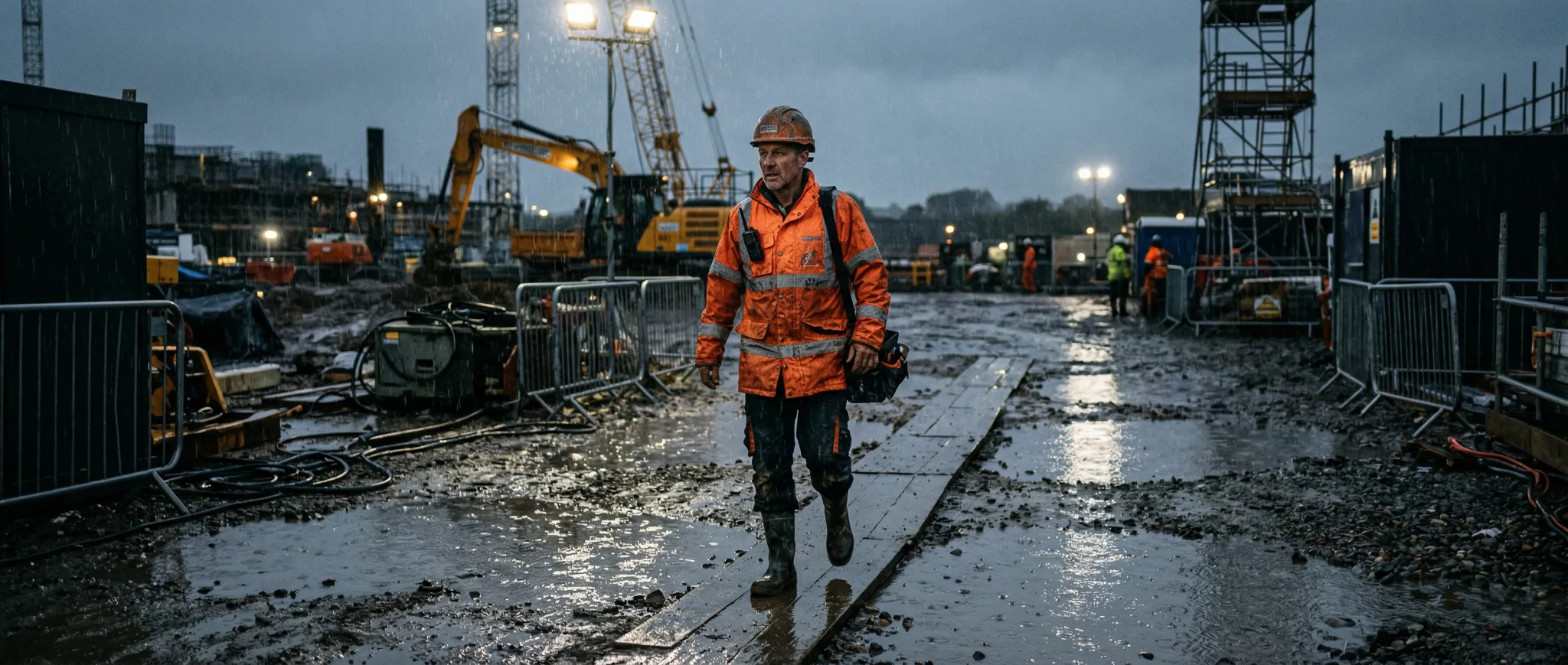
Rain is a fact of life on UK job sites, and the right waterproof gear keeps you working instead of sheltering. We have compared waterproof jackets, over-trousers, bib-and-brace overalls, and hi-vis rain suits from Helly Hansen, Portwest, and Dickies, focusing on waterproof ratings, taped seams, breathability, and whether they fit comfortably over your normal workwear without restricting movement.
Keep working through the rain with waterproof gear that breathes and moves with you. We have compared the best jackets, trousers, and overalls for UK site conditions.
Quick Answer
The Helly Hansen Workwear Voss Rain Jacket at around £80 is the one to buy if you work outside in rain rather than dodging it: taped seams, a proper waterproof shell, and light enough to live in the van. For a hi-vis waterproof that goes on over everything and packs into its own pocket, the Portwest H440 Lightweight Hi-Vis Rain Jacket at around £30 has thousands of reviews for a reason. Roofers and scaffolders out in a downpour all day should look at the heavy-duty Helly Hansen Workwear Impertech Waterproof Jacket at around £100, accepting that it does not breathe.
Best for HGV Drivers
9 reviewedHeavy goods vehicle drivers operating Class 1 and Class 2 vehicles across long-haul and regional routes, needing gear that handles cab vibration, overnight stops, and all-weather motorway conditions
Read GuideBest for Electricians
10 reviewedQualified electricians working in domestic and commercial settings, dealing with tight spaces, poor lighting, and non-conductive gear requirements while driving between multiple jobs daily
Read GuideBest for Plumbers
10 reviewedPlumbers and heating engineers working in domestic and commercial properties, regularly dealing with wet environments, cramped cupboards, and emergency winter callouts that demand waterproof, durable gear
Read GuideBest for Builders
10 reviewedGeneral builders and construction workers on residential and commercial sites, facing rain, dust, heavy impacts, and strict CDM safety regulations that demand tough, compliant gear
Read GuideBest for Roofers
8 reviewedRoofing contractors working at height on residential and commercial buildings, exposed to wind and rain with no shelter, needing lightweight gear that stays secure on ladders and wet tiles
Read GuideBest for Scaffolders
8 reviewedScaffolding erectors and dismantlers working at height, hauling heavy steel tubes and fittings all day in one of the most physically demanding trades in construction
Read GuideBest for Carpenters
4 reviewedCarpenters and joiners splitting time between workshops and on-site installations, battling sawdust, sharp edges, and the need for precision while carrying expensive power tools in their vans
Read GuideBest for Painters & Decorators
9 reviewedPainters and decorators working in residential and commercial properties, needing easy-clean gear that survives paint splashes and white spirit while looking professional in occupied homes
Read GuideBest for Locksmiths
2 reviewedEmergency and residential locksmiths working alone at unsociable hours, often arriving at dimly lit properties at night where personal safety, focused lighting, and compact portable gear are essential
Read GuideBest for Landscape Gardeners
10 reviewedLandscape gardeners and groundskeepers working exclusively outdoors year-round, battling mud, rain, and heavy machinery vibration while needing fully waterproof boots and gear that cleans easily
Read GuideBest for Delivery Drivers
10 reviewedParcel, food, and goods delivery drivers using vans and cars, making dozens of stops daily in all weather and needing gear that handles constant engine restarts and slip-prone doorsteps
Read GuideBest for Van Drivers
9 reviewedCommercial van drivers operating medium-sized vehicles on congested urban streets and tight residential roads, carrying valuable tools that make parking mode dashcams and vibration-resistant mounts essential
Read GuideBest for Taxi Drivers
5 reviewedLicensed taxi and private hire drivers pulling long 10-12 hour shifts, needing discreet dual-facing dashcams for passenger dispute protection and gear built for all-day comfort and night driving
Read GuideBest for Ford Transit
5 reviewedFord Transit — the UK's most popular commercial van with over 400,000 on the road, offering wide accessory compatibility and straightforward dashcam hardwire installations via well-documented fuse slots
Read GuideBest for Mercedes Sprinter
5 reviewedMercedes Sprinter — premium large commercial van favoured by fleet operators and tradespeople needing bigger payloads, with a more complex CAN-bus electrical system that requires careful dashcam hardwiring
Read GuideBest for Mitsubishi Outlander PHEV
5 reviewedMitsubishi Outlander PHEV — popular plug-in hybrid SUV for tradespeople, with a dual-power electrical system that causes dashcam restarts when switching between petrol and EV mode unless properly hardwired
Read GuideBest for Citroen Berlingo
5 reviewedCitroen Berlingo — compact commercial van popular with electricians, plumbers, and locksmiths for urban work, with a smaller windscreen that needs careful dashcam placement and compact camera models
Read GuideAll Wet Weather Gear We've Reviewed

Helly Hansen Workwear Voss Rain Jacket
4.5/5 (3,200 reviews)

Helly Hansen Workwear Manchester Waterproof Rain Jacket
4.5/5 (2,100 reviews)

Portwest H440 Lightweight Hi-Vis Rain Jacket
4.3/5 (5,600 reviews)

Portwest F440 Hi-Vis Iona Classic Rain Jacket
4.4/5 (3,800 reviews)

Portwest S466 Hi-Vis Waterproof Traffic Jacket
4.4/5 (4,100 reviews)

Portwest S585 Hi-Vis Waterproof Winter Work Overalls
4.4/5 (2,200 reviews)

Portwest C465 Hi-Vis 3-in-1 Waterproof Contrast Jacket
4.4/5 (1,900 reviews)

Helly Hansen Workwear Impertech Waterproof Jacket
4.3/5 (890 reviews)

Portwest H445 Hi-Vis Waterproof Long Raincoat
4.3/5 (2,700 reviews)

Portwest H440 Lightweight Hi-Vis Rain Jacket Orange
4.3/5 (2,900 reviews)
How to Choose Wet Weather Gear: Buying Guide
There are two ways to get wet in a waterproof jacket: rain coming in, and sweat not getting out. A good work waterproof balances both, and the numbers on the label tell you which way a jacket leans.
Waterproof ratings in millimetres
Fabric waterproofness is measured as a hydrostatic head: how tall a column of water the fabric holds back before it seeps through. Around 1,500mm is the point a fabric can be called waterproof. That copes with drizzle. Steady rain wants 5,000mm and above. Kneeling on a wet roof or leaning on a wet scaffold tube pushes water through the fabric under pressure, so for that 10,000mm and up is where the serious jackets sit. Cheap jackets often quote no figure at all; if the listing says water resistant rather than waterproof, it means showerproof. Then look at the seams. Every needle hole is a leak until it is taped on the inside, and taped seams are the single feature that separates the Helly Hansen Workwear Voss Rain Jacket (around £80) and Portwest F440 Hi-Vis Iona Classic Rain Jacket (around £35) from a jacket that wets out at the shoulders in the first hour.
Breathability and the EN 343 label
Breathability is how fast sweat vapour passes out through the fabric. A polyurethane-coated jacket like the Helly Hansen Workwear Impertech Waterproof Jacket (around £100) is close to impermeable in both directions, which is why it is used in fish processing and chemical handling and why it will steam you in a mild shower if you are carrying blocks. Laminated fabrics let vapour out while blocking water. EN 343 is the European standard for rain protection and puts two numbers on the label: water penetration resistance first, then water vapour resistance, each on a class scale where higher is better. A jacket marked 3:1 keeps water out well but breathes poorly. Not every work jacket carries the mark, so where it is missing go by the fabric type and the reviews.
Hi-vis waterproofs
Hi-vis certification is EN ISO 20471, separate from waterproofing, so check for both. The Portwest S466 Hi-Vis Waterproof Traffic Jacket (around £40) is the roadside cut with reflective banding high on the body and a zip-off hood. The Portwest H440 Lightweight Hi-Vis Rain Jacket (around £30) and the Portwest H440 Lightweight Hi-Vis Rain Jacket Orange (around £30) are the same packable shell in yellow and in orange for sites that specify orange. The Portwest H445 Hi-Vis Waterproof Long Raincoat (around £35) is a thigh-length coat rated to the American ANSI Class 3 standard, so confirm EN ISO 20471 on the listing before relying on it for a UK site. The navy F440 has reflective tape but is not a hi-vis colour. The Portwest C465 Hi-Vis 3-in-1 Waterproof Contrast Jacket (around £70) gives you a shell and a zip-in fleece, but the yellow and black colourway is not always certified, so check.
Scaffolders and roofers versus delivery drivers
At height the jacket has to work under a harness. That means a shell that is not so bulky the straps sit wrong, a hood that fits over a hard hat without blocking your side view, and a length that does not ride up under the harness and let rain into your waistband. A long coat like the H445 is wrong up a ladder because it catches your knees. The one-piece Portwest S585 Hi-Vis Waterproof Winter Work Overalls (around £60) close the gap between jacket and trousers entirely, at the price of stripping off to use the toilet and overheating if you are grafting. Our scaffolders' wet weather guide and roofers' waterproof jacket guide cover the harness and hard hat problems in detail. Delivery and multi-drop drivers have the opposite need: a jacket that goes on and off forty times a day and dries on the seat between drops. The H440 packs into its own chest pocket and dries fast. For client-facing trades the black Helly Hansen Workwear Manchester Waterproof Rain Jacket (around £90) is heavy-duty without looking like site kit.
Keeping it waterproof
Water beading off the outer fabric is a durable water repellent finish, and it wears off with dirt and washing. When a jacket starts to soak at the surface, wash it in a technical wash rather than household detergent, then reproof with a wash-in or spray treatment. Cement dust, mud and diesel kill the finish faster than rain does, so the site jacket needs this more often than the cab jacket.
We have not stood these jackets under a shower rig. Our picks come from manufacturer fabric and seam details, the standards marked on each garment, and cross-referencing what UK roofers, scaffolders and drivers report in owner reviews about leaking seams, hoods and how the jackets hold up after a season. Where a standard on the listing is American rather than European we have flagged it.
Frequently Asked Questions
Around 1,500mm is the minimum for a fabric to be called waterproof and only handles drizzle. For steady rain look for 5,000mm or more, and for kneeling or leaning on wet surfaces 10,000mm and up. Taped seams matter as much as the number, because an untaped shoulder seam leaks whatever the fabric rating.