
Pressure washer with no tap on site: water butts, IBCs and flow rate
Affiliate Disclosure: As an Amazon Associate we earn from qualifying purchases. This doesn't affect our editorial independence — every recommendation is based on genuine research and analysis.
This site uses Amazon affiliate links. If you buy through them we earn a small commission at no extra cost to you.
You can run a pressure washer on a site with no tap, as long as the machine can draw water through a suction hose. Kärcher lists its SH 5 suction hose for the K4 to K7 range, and Bosch quotes a self-priming lift of 0.5 m for the UniversalAquatak 135 with a suction hose fitted. Put the container level with or above the machine, fit a filter on the intake, prime the hose, and never let it run dry. The number that matters is flow rate, because it decides how long your water lasts. A Kärcher K4 at 420 litres an hour empties a 210-litre butt in about half an hour of trigger time.
Flow rate is what empties the tank
Everyone reads the bar figure. On a site with no tap, the litres per hour figure is the one you plan around. It is the maximum the pump moves with the trigger held, so in practice the water lasts a bit longer, because nobody holds the trigger non-stop. Here is the rough sum for common containers.
| Machine | Max flow | 210 L water butt | 1,000 L IBC |
|---|---|---|---|
| Kärcher K4 Power Control | 420 L/h | about 30 min | about 2 h 20 min |
| Bosch UniversalAquatak 135 | 410 L/h | about 30 min | about 2 h 25 min |
| Kärcher K5 Premium | 500 L/h | about 25 min | about 2 h |
| Kärcher K7 Premium | 600 L/h | about 21 min | about 1 h 40 min |
Flow figures are the manufacturers' maximums. Pressure and flow both drop a little when the pump is lifting water instead of being fed from a mains tap, so treat the times as best case.
What that means on a job: a butt is enough to wash the wheels and arches of a van and the mixer before you knock off. Cleaning a block-paved drive before handover wants an IBC, or a bowser and a full morning. Our commercial pressure washer guide explains why a bigger flow also cleans faster, which partly makes up for the water it burns.
Which machines can draw from a container
Not every washer will pull water uphill, and some cheaper units are not designed to draw from a container at all. Check the manual for a suction height before you buy for this job.
The Kärcher K4 Power Control at around £200 takes the Kärcher SH 5 suction hose, which comes with a filter. 130 bar and 420 L/h make it the sensible size for a builder washing kit down before going home without draining a butt in ten minutes.
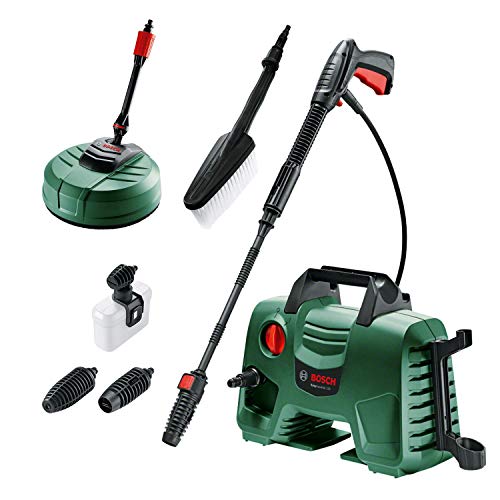
The Bosch UniversalAquatak 135 at around £150 is the one with the clearest self-priming claim, 0.5 m with a suction hose, which is sold separately. 135 bar at 410 L/h.
The Kärcher K5 Premium at around £300 and the Kärcher K7 Premium Full Control Plus at around £450 also take the SH 5. More pressure and more flow, so a bigger container. The K5's 10 m hose helps a lot when the IBC is on the back of a pickup and the van is across the yard.
The Nilfisk Select 130 at around £160 has a 7.5 m hose. Check Nilfisk's accessory list for a suction kit that fits your model before relying on it for container work.
Every one of these runs on 230 V. Plenty of sites are 110 V only, so you need a 230 V supply from a generator or a big enough power station, and our generator vs power station piece covers what will start a washer motor.
Setting it up so the pump survives
Level or higher. The pump lifts water a short way and no more. Bosch quotes 0.5 m. Stand the butt on a pallet so it is higher than the machine and gravity does the work.
Filter the intake. Rain butt water carries leaves, grit and things that float. A pump that ingests grit dies early and the warranty will not cover it. The SH 5 has a filter at the end for this reason. Keep it off the bottom of the container where the sludge settles.
Prime it. Fill the suction hose with water before you start, or the pump will run on air. Owners say the same thing in every review: weight the strainer end so it does not float up when the pump starts pulling.
Never run dry. When the container empties, stop. Running a pump with no water through it is how seals get cooked, and the manuals warn about it for a reason.
Clean water only. Rainwater and tap water carried in a clean bowser are fine. An IBC that once held chemicals, diesel or anything else is not, even rinsed. And no detergent in the supply. Detergent goes through the machine's own bottle or the low-pressure nozzle.
A note on hosepipe bans
Hosepipe bans are about mains water through a hose. Rainwater you caught off the cabin roof is a different matter, though every water company writes its own exemptions, and business use gets its own list. So read the notice for the area the job is in. Do not guess.
For which machine suits which kind of site work, see our pressure washers for builders list.
Frequently asked questions
Can I use a pressure washer with a water butt?
Yes, if the machine can draw through a suction hose. Kärcher sells the SH 5 for its K4 to K7 range, and Bosch quotes 0.5 m of self-priming lift on the UniversalAquatak 135. Raise the butt so it sits higher than the washer, filter the intake and prime the hose before you start.
How long will a water butt last with a pressure washer?
About half an hour of trigger time for a 210-litre butt on a Kärcher K4, which moves up to 420 litres an hour. A K7 at 600 litres an hour gets you nearer twenty minutes. Nobody holds the trigger flat out, so in practice it goes a little further than that.
Do I need a pump to run a pressure washer from a tank?
Usually not. If the washer is rated to draw water, it pulls it the last half metre or so on its own. Where it struggles is a tank sat well below it, say on the ground with the washer up on a tailgate. Swap them round, so the tank is higher, and let gravity feed it.
Will running a pressure washer dry damage it?
Yes, and quickly. The water passing through is what keeps the pump seals cool. So the moment the butt is empty, or you hear the hose gulping air, let go of the trigger and switch off. Same before you start: hose primed and full first, motor on second.
Top picks: Pressure Washers for Builders
Ranked from our research and cross-referenced buyer reviews. Prices change, so check the current price on Amazon.

Pressure Washers
Karcher K4 Power Control Pressure Washer
Around £199.99
Check price on Amazon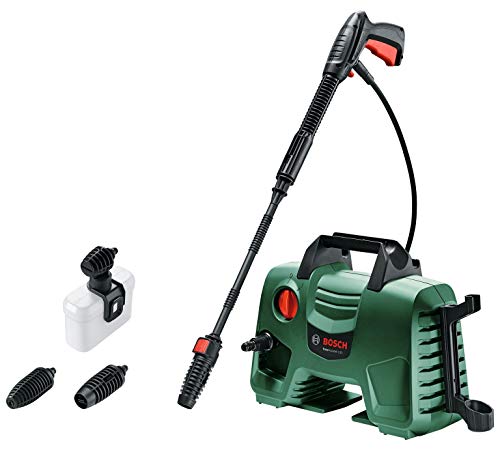
Pressure Washers
Bosch UniversalAquatak 135 Pressure Washer
Around £149.99
Check price on AmazonRelated Reviews

Browse All Pressure Washers
10 products reviewed with buying guides
Affiliate Disclosure: As an Amazon Associate we earn from qualifying purchases. This doesn't affect our editorial independence — every recommendation is based on genuine research and analysis.