
Van dash cams for self-employed drivers — what's worth fitting in 2026
Affiliate Disclosure: As an Amazon Associate we earn from qualifying purchases. This doesn't affect our editorial independence — every recommendation is based on genuine research and analysis.
Heads up — some links below are affiliate links (Amazon and VIOFO). If you buy something through them, we earn a small commission at no cost to you. It keeps the site free and commission-free for the tradespeople using it.
Why self-employed is different from fleet
Most dash-cam content out there is written for fleet managers. Cloud connectivity, multi-vehicle dashboards, driver scoring — all useful if you're running ten Sprinters out of a depot. Useless if you're a one-van operation doing rewires in Birmingham.
What a self-employed driver actually needs from a dash cam is narrower: rock-solid evidence if someone reverses into your van outside Wickes, parking-mode coverage when you're inside on a job, and footage that holds up at a claims adjuster without a cloud subscription you have to remember to renew. That changes the shopping list.
The number that matters: £2,685
That's the average UK insurance claim for tool theft from a van in 2025, per Insightdiy's analysis of the latest figures. And tool theft incidents went up 16% year-on-year — close to 31,000 reported cases in 2025, according to the Worker's Union. One every 21 minutes.
You won't catch a thief on a dash cam alone. But what a dash cam does do is record the registration of the van that pulled up next to yours at 2am, or the bloke who tried the back door of your Berlingo while you were eating a sandwich. That's the difference between 'no leads, claim approved minus excess' and 'recovered tools, no claim, no premium hike'.
For self-employed trades, the second one is worth a lot. A single claim on van/tool insurance can push your annual renewal up by £1,500-£3,500, depending on history. The maths on a £150 dash cam isn't subtle.
The four things to check before you buy
1. Hardwire kit, not cigarette lighter
This is the one people miss. A dash cam that runs off the 12V socket only records when the engine's on. Fine for accident-on-the-road footage. Useless for parking mode, which is when 80% of self-employed claims happen.
You want a hardwire kit that taps into the fusebox so the camera can stay on with the engine off, draw a tiny trickle from the battery, and only wake up when it detects motion or impact. Most decent cams ship with this kit included or as a £20 add-on. Get it. Fit it yourself in 20 minutes if you're handy, or pay an auto sparky £40.
2. Front and rear, not just front
For a working van the back is where stuff happens. Reversing into a bollard you didn't see, someone clipping the rear corner in a Tesco car park, an attempted break-in through the bulkhead doors. A front-only camera misses all of it.
The two-channel options below all include a small rear unit that mounts inside the back doors or in the cabin facing the rear bulkhead. The cable run is the only annoying part — usually 5-6 metres along the roof lining. Half an hour with a trim removal tool and you're done.
3. Loop recording with G-sensor lock
Every modern dash cam loop-records — meaning it overwrites the oldest footage when the SD card fills up. What you want is a G-sensor that detects an impact and locks the file from being overwritten, so when you finally get round to checking it, the footage is still there. Standard on anything decent. Worth checking the spec.
4. The right SD card
Don't buy the camera and then put a £4 generic SD card in it. Dash cams write constantly, which destroys consumer-grade flash storage in months. You want a 'high endurance' or 'dash cam rated' card from SanDisk or Samsung. A 128GB SanDisk High Endurance is about £20 and lasts years. The £4 card lasts about ten weeks before it starts dropping files silently.
The three we'd actually fit
For the daily working van — Nextbase 422GW
Quad HD front recording, decent night performance, good emergency SOS feature that calls for help if it detects a serious crash and you don't respond. The interface is straightforward enough that you can pull footage from the SD card on a laptop without faffing with apps. Nextbase's Click&Go magnetic mount means you can pop the camera off easily when you park overnight in a dodgy area. The Nextbase 422GW is what we'd buy. Check current price on Amazon.
For the proper insurance-grade setup — Viofo A129 Pro Duo
Two cameras, 4K front, 1080p rear, GPS, parking mode, the lot. Viofo has built a reputation for getting the technical stuff right — bitrate, sensor quality, file structure that adjusters actually accept. The downside is the interface; it's not as friendly as Nextbase, you'll be doing the setup through a phone app and there's a small learning curve. But the footage quality is in a different league. The Viofo A129 Pro Duo is the one for tradespeople who've already had one claim and don't want a second. Check current price on Amazon.
VIOFO no longer sells the A129 range itself. If Amazon runs out, the direct replacement is the A229 Pro 2CH from VIOFO's own store, around $350 in US dollars, shipped to the UK.
For the budget-conscious — Cobra SC200D
If you're a one-job-a-week guy and you just want something on the screen, the Cobra SC200D is the honest answer. Two channels, 1080p, simple as a brick. It won't win any tech awards and the night footage isn't great. But it's about a third the price of the Viofo and it'll do the job for a basic incident claim. Check current price on Amazon.
What about insurance discounts?
Be careful here. Some insurers — Direct Line, Aviva, a few others — offer small discounts (typically 5-10%) for fitted dash cams. Most don't, and the discount only applies if the cam is on their approved list. Don't buy a dash cam to save on premiums; buy it to protect your no-claims bonus when something goes wrong. The discount is a bonus, not the reason.
Fitting it without ruining your headlining
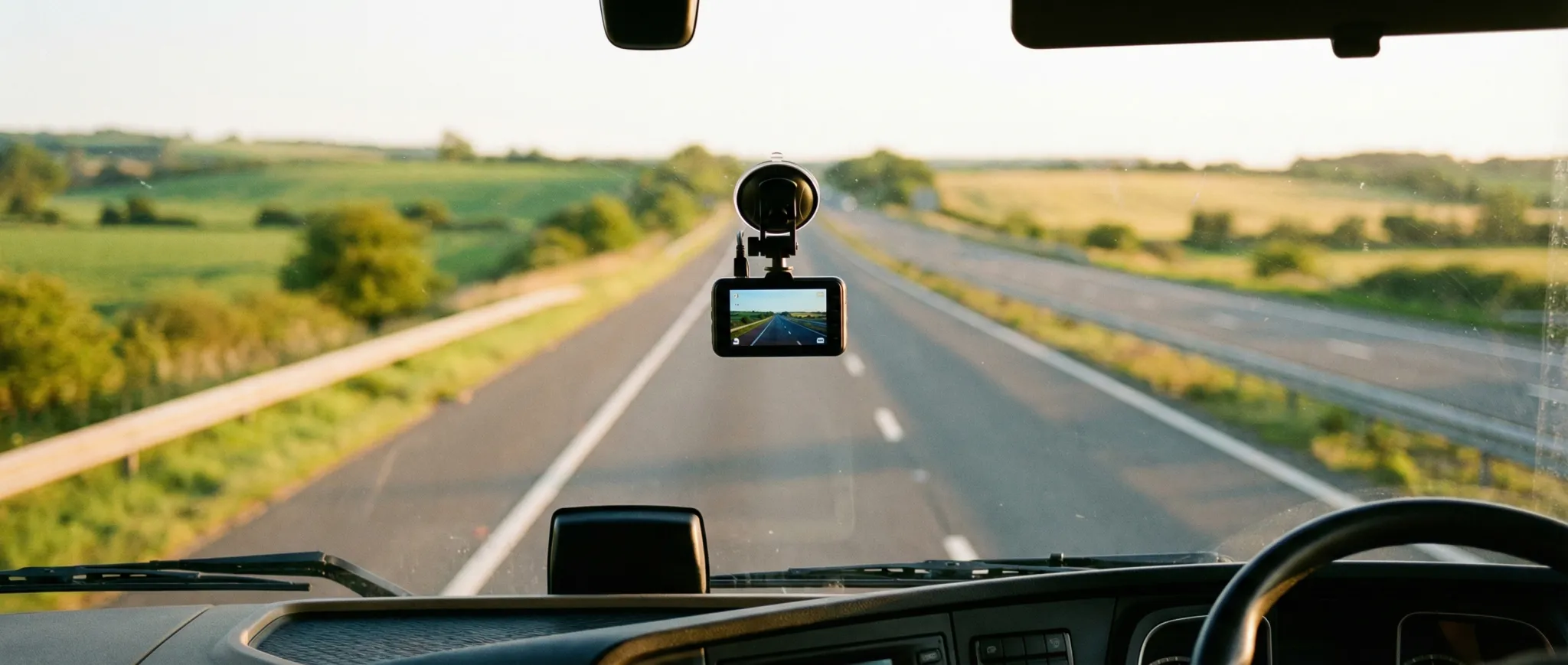
For the windscreen mount, Nextbase's adhesive pads are very good — they don't move once they're on, and they peel off cleanly with heat (hairdryer for two minutes) when you sell the van. Sit the camera up in the top corner, behind the rearview mirror so it's out of your sight line and probably tucked just inside the MOT-allowed area for windscreen items.
For the cable run, use a plastic trim removal tool — £5 from Halfords. Tuck the cable into the rubber seal around the windscreen, run it along the A-pillar (mind the airbag — never run a cable through where an airbag will deploy), and down to the fusebox. For the rear cam, run it along the headlining seam. Genuinely 30-45 minutes if you're methodical.
The honest answer
If your van earns your living and you've never had a claim — fit the Nextbase 422GW. £150 in, half an hour to fit, you're sorted. If you've had a claim already and you know what bad footage looks like — spend the extra £80 and get the Viofo A129 Pro Duo, because the next claim is the one where the quality matters.
Either way, hardwire it. Use a high-endurance SD card. Stick a small sticker on the back of the van that says 'CCTV In Operation' — half the deterrent value of a dash cam is people knowing it's there.
For more on van security as a whole, we've also covered our full dash cam comparison and other van-driver gear that earns its keep.
Top picks: Dashcams for Van Drivers
Ranked from our research and cross-referenced buyer reviews. Prices change, so check the current price on Amazon.



Related Reviews
Browse All Dashcams
13 products reviewed with buying guides
Affiliate Disclosure: As an Amazon Associate we earn from qualifying purchases. This doesn't affect our editorial independence — every recommendation is based on genuine research and analysis.