
What goes on a scaffolder's tool belt
Affiliate Disclosure: As an Amazon Associate we earn from qualifying purchases. This doesn't affect our editorial independence — every recommendation is based on genuine research and analysis.
This site uses Amazon affiliate links. If you buy through them we earn a small commission at no extra cost to you.
A UK scaffolder's belt carries four things on tube and fitting work: a 7/16 Whitworth ratchet, the 21 mm size that fits most UK scaffold fittings, a podger or spanner as a back-up, a short spirit level, and a tape. System scaffolders add a hammer, because Cuplok cups and Layher wedges get knocked home rather than spun up. Each tool sits in its own frog or holster so it can be grabbed one-handed, and anything that could fall is tethered, because there are people working below you. That is the whole list. Everything on the belt goes up and down ladders all day, so scaffolders travel light.
The ratchet and the spanner
Most UK scaffold fittings take a 7/16 inch Whitworth nut, which suppliers also sell as 21 mm. The ratchet is the tool you reach for hundreds of times a day, tightening and slackening couplers, and it lives on your dominant side in a holster where your hand lands on it without looking. Most scaffold ratchets have a tapered spike on the end of the handle. That spike is the podger, for lining up holes and levering a fitting into place. Some scaffolders also carry a podger spanner, a fixed spanner with the same tapered end, for spots where there is no room to swing a ratchet.
Buy these from a scaffold supplier or a merchant who knows what 7/16 Whitworth means. They are cheap, they get dropped, and a spare in the van is normal.
Level, tape and hammer
Level. A short boat or torpedo level in its own holder, for checking that standards are plumb and ledgers are level as the lift goes up. Short enough not to snag on bracing.
Tape. Five or eight metres, on a clip or loop. Bay lengths, lift heights and tie spacing get measured all day.
Hammer. Only if you put up system scaffold. Layher Allround and similar systems lock ledgers with a wedge you hammer in, and Cuplok's top cup gets knocked down with a hammer. On tube and fitting, the hammer usually stays in the van.
Knife. For banding, netting and sheeting ties, if the site allows one. More sites now insist on a safety knife with a retracting blade, so check before you arrive.
The belt itself
Most scaffolders wear a plain, wide, heavy belt and hang separate frogs and holsters off it. That way each tool sits exactly where you want it, and you can move the level to the other hip when the job changes. A big pouch belt built for a carpenter or a sparky is the wrong shape. It carries too much, the pouches catch on tube and bracing as you climb through a lift, and every extra pocket is something else to drop.
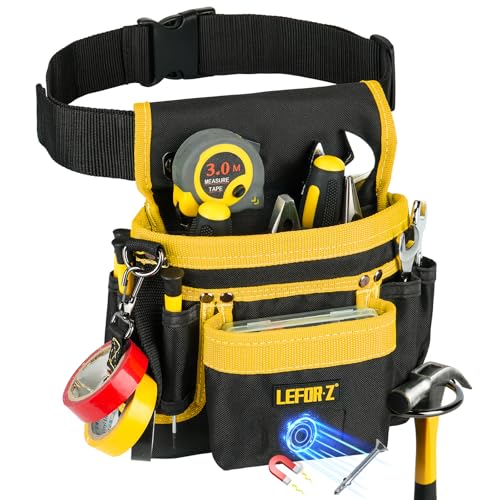
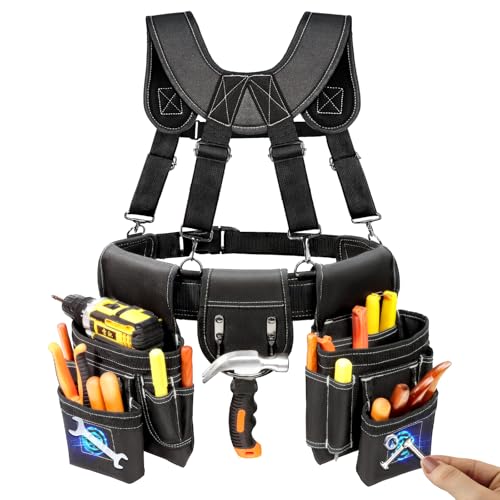
If you would rather buy one belt and adapt it, look for a padded back, a strong buckle and a hammer loop you can use as a ratchet holster. The DeWalt Essential Tool Belt at around £35 has a padded back belt, a hammer loop and metal loops. The CLC Work Gear Tool Belt at around £45 has a steel belt ring and a hip pad. The Scruffs Classic Tool Belt at around £30 is the cheaper option with a hammer loop. All three are general trade belts, so expect to take pouches off rather than add them. The options are compared on our tool belts for scaffolders page, and our tool belt buying guide covers sizing.
Tethering: the part that matters most
A 21 mm ratchet dropped from the fourth lift is a serious injury for anyone underneath. The Work at Height Regulations 2005 require steps to prevent anything falling, so far as reasonably practicable, and on a working scaffold that means tool tethers. Scaffold contractors and principal contractors increasingly make them a site rule.
The usual setup is a tether point on the tool, a coiled or elasticated lanyard rated for the tool's weight, and an anchor point on the belt or holster. Ratchets and levels are the obvious ones. Tapes come with tether points now, or take an adapter. Two rules come with it. Use a lanyard rated for the weight of the tool it carries. And do not clip tool lanyards to your harness's fall arrest attachment points, which are for you, not your kit.
Belt and harness together
On most scaffolds you wear the belt and the harness at once, and they fight for the same space at your waist. Put the harness on first and adjust it, then the belt, and check the belt is not sitting over a harness buckle or pinning a strap. Keep heavy tools off the small of your back, where they press against the dorsal webbing and get in the way of the lanyard. Our safety harness guide covers the fit and the daily checks, and our wet weather guide for scaffolders covers what to wear under the lot.
Weight is the last thing. Two kilos on the hips feels like nothing at 7am and like a bag of cement by four, especially climbing. Carry what you use every hour on the belt and leave the rest in the bag at the bottom of the ladder.
Frequently asked questions
What size spanner do scaffolders use in the UK?
A 7/16 inch Whitworth, which suppliers also sell as 21 mm. It fits the nuts on most UK scaffold fittings. Most scaffolders carry a 7/16 ratchet as the main tool and a fixed podger spanner as a back-up for tight spots, both with a tapered spike on the handle.
What is a podger on a scaffold spanner?
The tapered spike on the end of the handle. Scaffolders use it to line up bolt holes, lever a fitting into position and lift a coupler into place. Most scaffold ratchets have one built in, and a podger spanner is a fixed spanner with the same tapered end.
Do scaffolders have to tether their tools?
There is no law that says the word tether, but the Work at Height Regulations 2005 require you to prevent objects falling where reasonably practicable. On a working scaffold that usually means tethering ratchets, levels and tapes, and many contractors now make tool tethers a site rule.
Can I clip tool lanyards to my safety harness?
Not to the fall arrest attachment points. The dorsal and sternal D-rings are for your lanyard and nothing else. Anchor tool tethers to the belt, the holster or a dedicated tool attachment point, and use a lanyard rated for the weight of the tool it holds.
Top picks: Tool Belts for Scaffolders
Ranked from our research and cross-referenced buyer reviews. Prices change, so check the current price on Amazon.

Related Reviews

Browse All Tool Belts
10 products reviewed with buying guides
Affiliate Disclosure: As an Amazon Associate we earn from qualifying purchases. This doesn't affect our editorial independence — every recommendation is based on genuine research and analysis.